I often get the “Hey, how can we innovate as a company?” question with little attention to each individual employee’s drive to innovate in their daily work lives being a major factor in one’s mind. That is the equivalent of asking “Hey, how can I win the super bowl?” without having a team composed of NFL football players.
Innovation is a sport to be practiced not something you can just show up on game day and expect to win. How many NFL football players don’t practice being great football players everyday and expect to win games every weekend?
Like any professional sport: if you don’t innovate in your daily life you won’t innovate anywhere else. The funny thing is if you tell someone who wants to be the greatest football player in the world to practice everyday and to push themselves to be a better player every time they practice you will get nods of support from just about anyone listening. (After all running the same drill with the same times will keep you playing JV your whole life.) Conversely, if you ask someone within a business that wants to innovate to constantly be thinking and implementing ways to change their best practices, improve their tools set, update their processes, or try new ways to be more efficient at the office you will often get a majority of employees supporting a resistance and responding with rolled eyes followed by something to the effect of “it’s fine just the way it is – and it has been for years. Why change it now?”
How can you expect to innovate a few times a year with a company filled with workers that don’t believe in practicing innovating with the tools they use, the environment they are use to, and the way they interact with one another on a daily basis? How would a superbowl NFL coach react to an athlete that would rather just run his usual drills when asked to try something new? You can’t expect a company of employees resistant to change or improve HOW they work to then all of a sudden change how a company or the world around them works, can you? It all relates – like the seeds in a root of a blossoming flower. (Sorry, probably too dainty an analogy for a football heavy post, huh?)
Furthermore, just like with football it won’t work with one star player or one small group embracing this ideal. Use the best tools, challenge the old ideas, and try out new processes when you get the opportunity. The more the WHOLE company pushes and adopts an ever changing, improving, and growing daily work life the more that company will get a shot at the innovation ring.
Happy Super Bowl Weekend to all those out there wanting to be their best every chance they get!
A Manifesto reveals the strengths and values within a company, and does so in a way that decreases the number of complex decision making hurdles for its employees in the day-to-day.
The manifesto will be “the bible” (though only a page) of reasons that lead a team without a need for individual leaders to be present, and can help create the next generation of leaders to form in the same vein.
It relieves people from the stresses and distractions inherent to complex (or seemingly complex) decisions, in the middle of the workday, while fighting in the trenches.
Picture this: A team of army rangers are falling back in the middle of an amazonian battlefield. They realize one of their platoon members went missing while under fire. What do they do? Unorganized soldiers may scatter under this pressure and lose their head. Should the next step be “Every man for themselves!”, or “Let’s hide it out until morning”? Luckily this group of rangers knows that there is one core value that prevails in situations like this: “never leave a soldier behind”. – Boom, decision made. They spend their time devising a plan to find him first and foremost (no matter the hurdles – it will be resolved).
Values help form a strategy. Most importantly, when things go wrong, values help keep the bigger picture moving tactically. Especially when “fires” make decision making difficult. Plans fail, but values do not.
More practically speaking, the battles on a tech company’s floor may be less tragic, but are battles nonetheless. Imagine there is a team developing a widget. It is done so with poor (if any) design, but is backend-ready and functional. A discussion may come up around the pros and cons of deploying something that doesn’t look good but is ready to ship for testing. The debate could rage on, but, with a core manifesto that decision is already made: if the core value says design is key to our tests – then the decision is made to implement a design before deploying. If the core value says release when ready and iterate – again the decision is already made.
Those decisions shape a company and should not change week-to-week, problem-to-problem, or day-by-day from department to department. They shape outcomes and the character of a company through a decision tree that is easy to repeat. Consistent and efficient decision-making is more important than re-assessing the perfect decision for the situation each and every time it comes up. The written word is amazing at facilitating that.
Of course, we all have great thoughts and your company has awesome values already, but having them written down is the difference between an interesting legend shared by some and a religion followed by many.
Documentation, although necessary, does not substitute for a short list of values. Documentation is rarely re-read, and often forgotten; we remember “Go when green” not “Statute 32 Section 5: All those that use public road shall obey stop lights based on the following color …..”
Finally, it is extremely important that your list of values are glossed over. One lazy move away from following your values can easily turn into a utter mess over the years. That does not mean you can’t change your values. If a situation comes up, and your values does not represent how you want to act two things MUST happen: 1) You re-examine your values and change them accordingly or 2) You adjust the situation to fit your values. Period.
As for my suggestions regarding the setting for how a document can be built as a team here are some thoughts.
Make sure people feel heard (i.e. right down every idea)
Help filter outlaws that promote restrictions (which end up being things people feel reprimanded for doing) and turn them into the concept that create direction and productivity to help people grow, expand, and focus. It is a document of supportiveness.
Use it to help give people clarity in situations that need tie breakers, or rules of thumb. For example, “future value does not trump current value” has saved our team from missing out on what we have while over planning for something we do not.
Be clear on what an item suggested means when it is written (often times one person’s perspective on what “awareness” can be, for instance, is different than another’s) Be descriptive.
Find a/the person that matches the essence of what a manifesto item describes. They will most likely be the champion of that thought and help keep it alive and well. Find the passion in the people and you will also find the strength in the doc.
I believe once the fundamental concepts are solidified into the manifesto it becomes a spine for current, and as importantly, new employees that come in so they can quickly latch onto and adopt the companies process/thinking as it expands in size.
There will be the debate over the items presented, and debate is good. As such, it may also be a good idea to nail down some keywords that keep the conversation on track to what we believe the manifesto points should adhere to.
The words I propose are:
positive
smooth
friendly
helpful
productive
If an item does not instill many of these words, for instance, then the item may be off track.
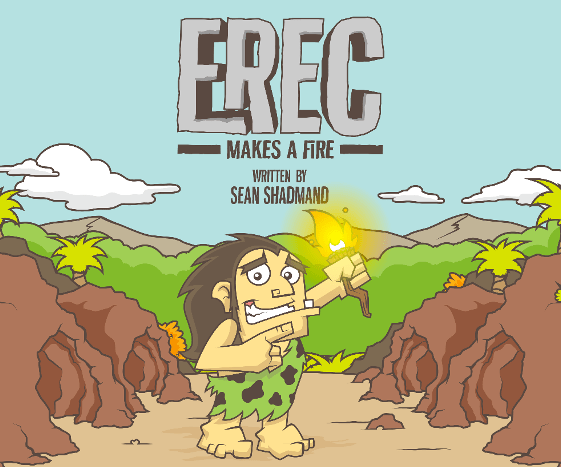
Erec Makes a Fire is a story of how a group of kids stumble upon a cave covered in ancient writings depicting the story of how a unique young cave boy (Erec) accidentally created his first great invention, fire. The story shows how, even in the simplest of times, one is able to form a business, sell a product, and create a success. The book is written to subtly embed one of the most fundamental parts of business in a child’s mind: leveraging an opportunity when finding demand in your community and providing a supply for it. Even before cash, computers, technology, LLC formation or business entities, business and entrepreneurs thrived through observation and invention, and they still do so today. This story helps teach youngsters, and remind their parents, that entrepreneurism is all around us and to keep an eye out for one’s own personal “fire” opportunity.
Why did I write the book?
As a person who loves the world of entrepreneurism, I also love telling a story about how anyone can turn a will or idea into a business. I have enjoyed telling that story, and giving tips on how to do it best, for a number of years through various mediums such as interviews in print, in person, and on TV. Now that more and more of my close friends are having kids I want to share that passion and story through a form that their kids can benefit from. I noticed there wasn’t much out there in the world of children’s books that took business concepts and simplified them into stories kids could love, as well as learn from. So, what else was I to do as an entrepreneur but to fill that void. Erec Makes a Fire is the first in a hopeful series of books that builds a foundation of business mindedness in our children.
Beliefs that inspired
Two major beliefs of mine contributed greatly to the creation of this story: First, immersion is a great key to early developmental learning, and secondly, kids are extremely capable of learning and understanding complex concepts early on, especially when it is told through story and analogy.
In regards to immersion, I believe that even if a child does not understand a concept introduced to them directly, being surrounded by that concept will help them become more comfortable with the subject matter as they mature. This makes the principles taught far less foreign to them, and therefore more easily consumed when they grow up, as compared to those learning the same concepts for the first time later in life.
I also believe that children can grasp complex concepts, like supply and demand or finance, far earlier in their lives than is generally taught today. I have always been amazed at how kids pick up core concepts so deeply. Yet, adults at times “protect them” from complicated concepts for worry of it going over their heads. Supply and demand can have complexities within – yes, but the basics are – well – basic and building stories around those concepts can most definitely be consumed by children. Look how well they understand other stories we give them, like ones around “how to share”, a concept that I find many adults still struggling to grasp. I remember sitting with adults during dinners as a kid while they talked to one another about their businesses around me. Over time and many family diners a grew more familiar with many of the things they talked about while still being a child. Although I was unable to articulate my perspectives on the subjects at the time I mades notes to remind myself that one day, when I got older, I would remember this: kids get more than you think.
Sticker Collection Available Through KickStarter
Erec Makes a Fire is a new kind of children’s book that immerses young people in concepts they should be given the chance to understand early in life so that they can have a foundation for understanding it more deeply as they grow up. As such the company under which the book is created is called “Small People. Big Ideas. LLC”
How and When Can I get it?
The first few copies will be made available as gifted items through a fundraising drive on KickStarter. I have my initial proofs and prototypes complete. Based on how much I can raise through KickStarter I am shooting to making it available by the spring of 2015. There will be special gifts given out through KickStarter in addition to the books themselves to make things more interesting, such as: signed copies; custom printed copies; packages including digital, print version and stickers; as well as custom designs where our artist injects a characterization of your child into a character in the book! Books will be made available through softcovers, hardcovers, and ebooks.
About Kick Starter:
KickStarter is a crowd funding platform that allows projects to get funded before they start. It is a great way to start a business or project and works perfectly with the Erec Makes A Fire book as the funds are only released if the book gets enough demand. The simplest way to think of KickStarter is this: think of those PBS drives on TV, the “If you pledge more than $50 you get this free tote bag” type of promotions. For a project like mine my gift will be an early copy of the book and other creative unique offers mentioned above that only funders will be able to receive. You can read more about KickStarter here: http://www.kickstarter.com/help/faq/kickstarter%20basics#Kick
Erg: Erec’s first customer as a Sticker
Why Did you Spell “Erec” with an “e” instead of an “i” ?
The names of the book are witten with some historical significance in mind. Homo Erectus and Homo Ergaster are the scientific names for the two homonids believed to be around during the time period fire was discovered. So, the characters names in the book take each half of each of those names: Erec, and his friend Tus are the first two characters introduced. Followed by his first two customers Erg and Aster. Just in case though, we made sure Eric Makes a Fire works too 😉
It’s finally here – Google Maps for iPhone! Seriously, thank god.
The Apple maps has gotten allot of flack, and I try to stay out of the bashing business, but man – it kept shoving the fact that it blows in my face for quite some time and it couldn’t be ignored.
On my iPhone4 the new Google maps movement is a bit choppy, but that could very well be my old device struggling to keep up. The funny thing about this app coming out now before christmas is that I was seriously considering upgraind to Android (as I believe 2013 will be the true shift for Google/Android’s supremacy , but with this app iPhone5 slipped right back into my option pool. Interesting play Google, interesting play…
One thing to observe: My home screen of my iPhone has now gone from Apple maps, mail, and safari to now sporting a Google trifecta of Google Maps, Gmail, and Chrome. All with my user account logged in. It is like Google is slowly creating an unatachable symbotic relationship with my iphone. All the apps from Google listed are a bit choppy but I still made them my primary apps for those functions for two reasons, 1) I am ready for a visual/ux refresh and a hybrid of Apple charm with Google power is satisfying 2) I use Google in every other aspect of my life, so why not one more? I see more of this to come in 2013.
Also, cheers to Google for giving into the mobile app revolution and ending their forced fight to “preserve” the HTML5 movement for the better of us all. The goal is always to make great products, and if HTML5 can do that now – use it, if you are giving up quality – don’t. It’s simple. I am glad they and others like Facebook finally realized how to play the game. Although it is a 6 year delayed reaction I am happy it’s here.
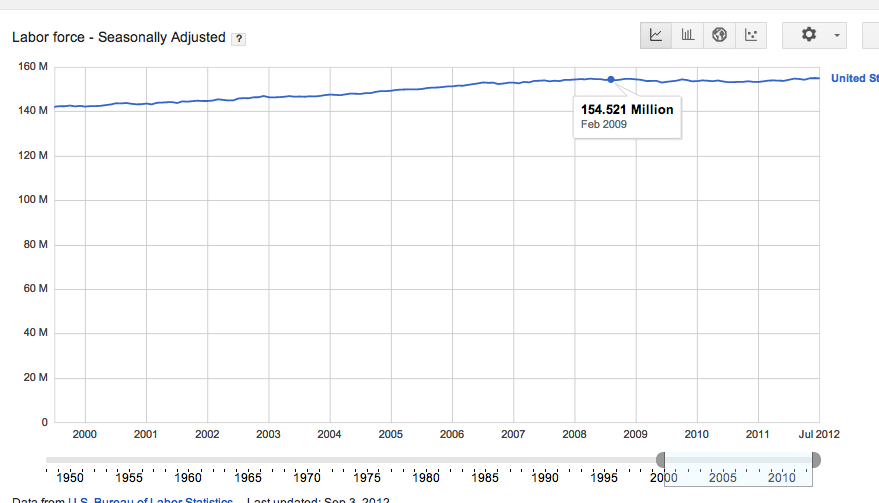
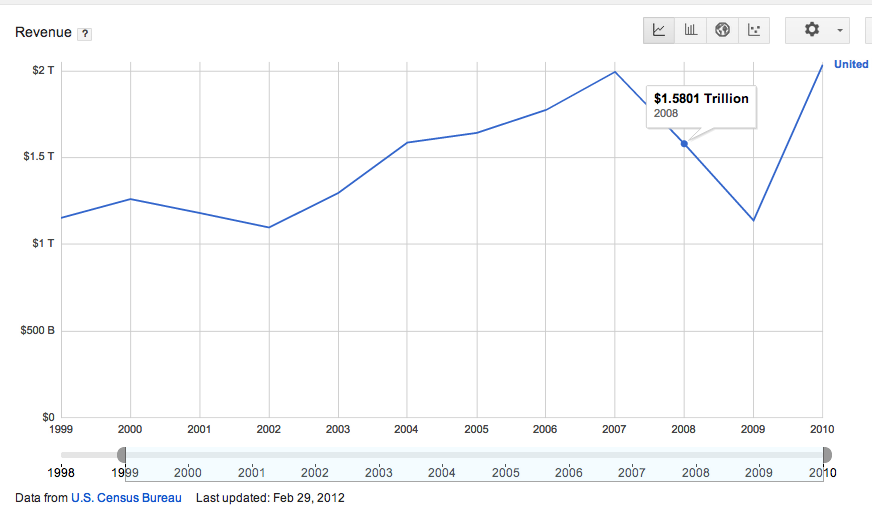
I am posting some updates to census stats since, as I said before, the data is there, it’s public and people should be exposed to it without ads or “interpretations” in the middle.
I just saw Morgan Spurlocks “The Greatest Movie Ever Sold”
The tight contracts, partner rejections, pitch meetings, cold calls, partnership management, moments of loss of control, brand push back, product placement challenges, and managing the selling of ones sole is depicted with more real reality in this movie than all reality shows on TV today.
I wanted to post this as a blog because I wanted to get your take on it. I feel that Morgan has yet again done a public service by exposing a hidden world in a creative and digestible way.
Them: Linear does not easily show ROI, we are slaves to Neilson and the data isn’t even accurate. – Digital has a definite ROI we can track.
Me: Is getting digital traffic and market appeal your #1 focus then?
Them: No, we don’t drive search and discovery towards digital nearly as much as linear
Me: Why?
Them: Because digital doesn’t make good money
Me: Why?
Them: Digital doesn’t get good value on ads or have enough ad fill compared to linear so there is less money
Me: Why not?
Them: becuase advertiser don’t spend there money on digital
Me: Why not?
Them: because there isn’t enough traffic going there with the right type of viewers?
Me: Do you know why there is a difference in veiwer types or know exactly what types of veiwers are on each?
Them: No.
Me: Do you try to drive the users you do like or want to digital?
Them: No.
Me: Why not?
Them: because there isn’t money there
Me: Is there ad roll in streaming video on digital?
Them: Yes
Me: Can you track ROI and metric/conversions easily in digital?
Them: Yes
Me: What is the retention on digital for vistors to streaming and non streaming video?
Them: Very high
Me: Why don’t you push people toward digital that you have ROI metrics on that you can push?
Them: Becuase there isn’t as much money in digital…
—Start over from top
Funny thing is as I looked at them like they are on crazy pills, they looked at me the same way. I think the next big media company will be one with less to lose so they can open their eyes at taking the necessary risks needed to evolve into the new market. Maybe Yahoo studios?
On the car ride up from a meeting on sand hill, Daniel Odio interviews me in “the hot seat” on how process plays a pivotal role in your startup’s business success.
Here are a couple videos that show Steve Jobs growing his philosphy, company vision, and product. One comes with a nice narration around his time building Next Computers. It’s a great glimpse into his fundemental beleifs that guided hmthroughthe years. The other is hi giving a lecture of where Apple came from and where it is going.
This video narrates Jobs creating Next Computers with the first group of employees at their company retreats.
This video is an early presentation by Jobs from 1980 describing how Apple started, what he sees its affects being, and some interesting insight into what he sees in tech startup potential and the growth of the human race.














 Sean Shadmand
